Having decided on the Storyteller Overland Stealth MODE, the wait begins for its delivery. And the journey down the camper van rabbit hole continues . . . this time into fuel. You may be thinking that this is a simple question/answer and not one that would be the subject of a blog post, but it’s a whole thing apparently.
DEF
In reading about potential or perceived difficulties in maintaining a Mercedes Sprinter, we kept reading about challenges we may encounter in finding diesel fuel and then something called DEF. As this is not an automotive, environmental, or scientific post, I’ll keep it short. Without certain filters and DEF, diesel vehicles may not be able to meet current emissions standards.
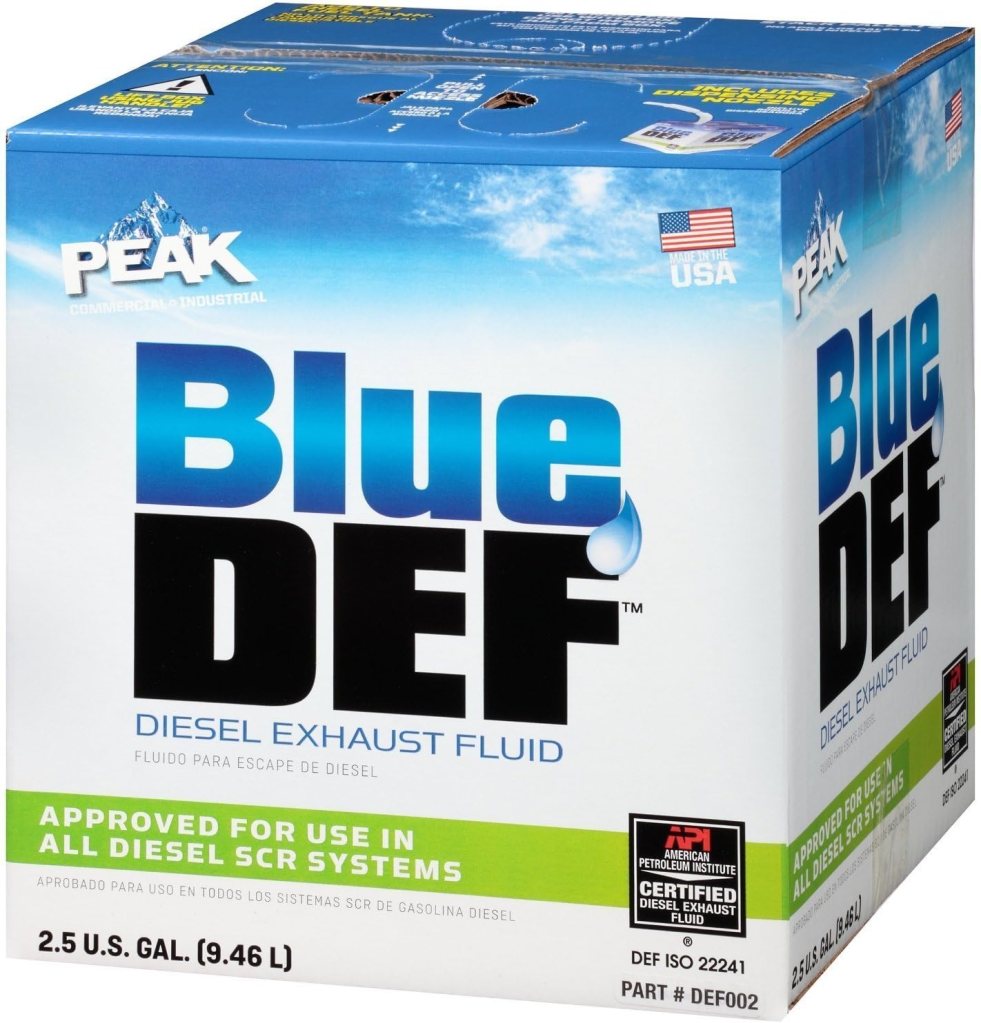
Diesel exhaust fluid (or DEF) is an additive that most modern diesel vehicles require to operate. Run out of DEF? The vehicle will go into limp mode and restrict your speed to 5-10mph. Don’t do that! So, why does this happen and what the heck is DEF any way? DEF is a solution comprised of urea and deionized water that lowers the nitrogen oxides in diesel exhaust. If you’re looking for a chemistry lesson on how DEF accomplishes this, Wikipedia is your friend.
Takeaway: If you have a diesel vehicle from 2010 or later, chances are you have DEF. It’s another fluid that will need to be refilled, but not nearly as often as you need to refuel. I hear it is best practice to keep a container on hand though many have had success at finding it available at truck stops via a separate blue-handled pump.
Diesel fuel
Unlike DEF, diesel was not a new term to us; however, we have never owned a diesel vehicle before. Prior to this camper van process, my knowledge of diesel consisted of:
- Trucks use diesel.
- It’s the green handle at the pump.
- It is not interchangeable with gas.
Now, apparently, we need to worry about the type of diesel and the temperature because – did you know – diesel gels in sub-freezing temperatures?!
Types of diesel
Let’s start with the types of diesel. Yes, different types?! I’m still shaking my head at the idea. Look, you go to the gas station and pull up to a gas pump (good ‘ole regular gas with the black handle) – you choose your octane. It’s bad enough when you have a car that requires premium fuel (91 or higher), and the gas station you’re at only has 87 or 89 octane. Okay, you roll the dice and figure one tank isn’t going to be a problem. The green pump – there aren’t any options – it’s just diesel, right?! Nope. WRONG.
Generally, there are two basic types of diesel:
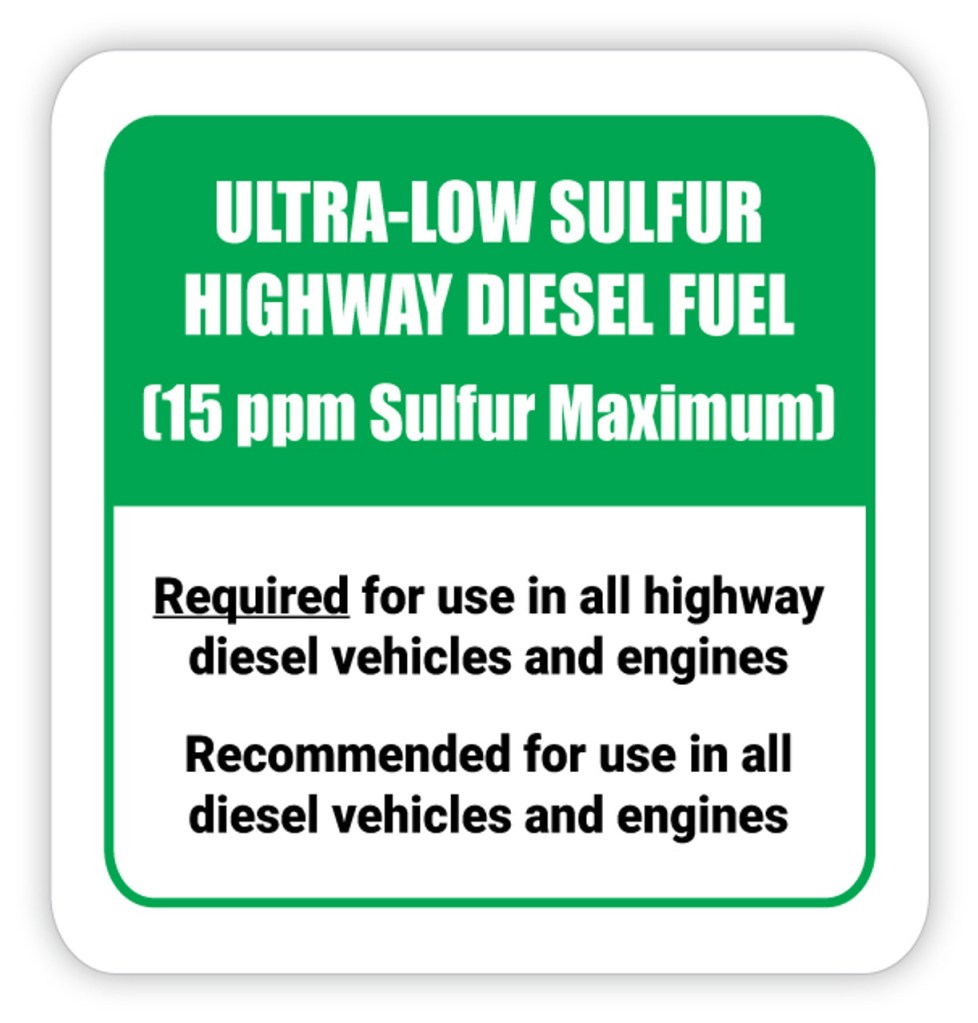
- Diesel #1 (1-D): Thought of as the premium version of diesel and preferred for winter temperatures. Typically has additives to help clean the engine and keep diesel liquid at lower temperatures. Commercial truckers typically use #1.
- Diesel #2 (2-D): Thought of as the standard version of diesel. Typically, this diesel is what you would find at most gas stations. It costs less, gels at higher temperatures, and is more volatile than #1. Most passenger cars and trucks use #2.
Now we move into renewable diesel and biodiesel. This stuff is confusing as all heck, and I’m not even sure I’ve got it right, but it seems that using a government resource as the source of truth is as good a place to start as any.

Renewable diesel is chemically identical to petroleum/traditional diesel but uses more environmentally friendly resources. If blended with petroleum diesel, it will be denoted with an R followed by a number that represents the percentage of renewable diesel. For example R20 is 20% renewable diesel/80% petroleum diesel blend.
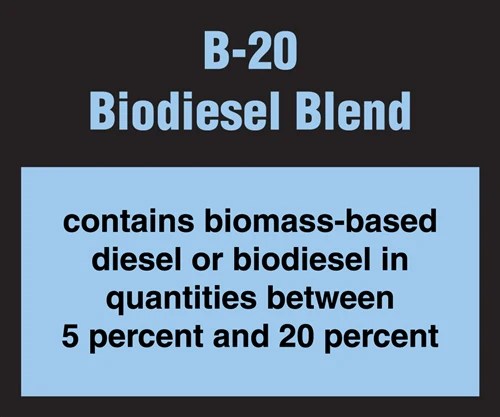
Biodiesel has a completely different chemical profile than diesel and renewable diesel as it is produced from vegetable oils, animal fats, or recycled cooking grease and composed of fatty acid methyl esters (FAME). As a result, it can cause problems for the fuel system: degrading rubber and loosening or dissolving varnish and sediments. Ultimately, it can clog engine fuel filters. These fuels, when blended with petroleum diesel will be denoted with a B followed by the percentage of biodiesel. For example B5 is 5% biodiesel/95% petroleum diesel.
Okay, what now? In outlining what Mercedes does not cover, the Mercedes warranty booklet includes the following little tidbit:
damages or malfunctions resulting from incorrect fuel usage, poor fuel quality (including biodiesel blends not meeting ASTM D6751 or EN590 quality standards).
In fact, there is a Mercedes-Benz Biodiesel Brochure floating around on the various Sprinter forums that contains this handy little graphic on page 8:
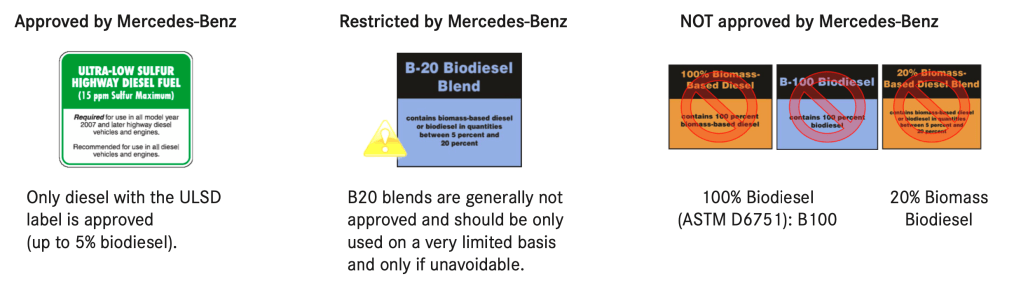
There are plenty of Sprinter owners that say they use whatever diesel the station happens to carry and don’t worry about it. We’ll see what we encounter when we need to fuel up.
Gelling
Before closing out, we do need to talk about the fact that diesel fuel apparently gels at lower temperatures. This basically means that the fuel solidifies, preventing fuel flow or clogging of the fuel lines. Diesel naturally contains paraffin/petroleum wax, which crystalizes in sub-freezing temperatures. By mixing #2 diesel with #1 diesel, fuel stations can get the “right” blend for the local conditions (if they plan ahead). In truly cold climates, it might be important to have fuel heaters to prevent the gelling.
Eyes wide open
Great – as if we didn’t have enough other “new” stuff to worry about – now, we need to pay attention to the DEF levels, where to find diesel and whether it is the “right” type, oh, and that it isn’t so cold that the fuel gels and clogs up the fuel lines. What HAVE we gotten ourselves into?
 platoaddict's pursuits
Leave a comment